Monday, July 16, 2018

Social Anxiety Doesn’t Get The Attention It Deserves

Fifteen million people have it, yet it remains in the shadows.


Sophie Trapani knew something was wrong when she started getting sick before class her freshman year of college.

She’d signed up for a course that required her to stand in front of her peers and deliver speeches. Public speaking can be daunting for most people, so she tried to bury her fears and push forward. But her anxiety seemed far worse than what her classmates were going through.

“It felt like my body was shutting down every time I had to give a speech,” she recalled.

At the time, Trapani was in therapy for depression and general anxiety, which her doctor suspected were at the root of her pre-class illness. But Trapani began researching her symptoms and realized they might be connected to other feelings of terror she felt during everyday life.

For years she’d struggled to carry out daily activities. She’d skip appointments or cancel plans with friends after agonizing about them for hours, the pressure mounting till she broke. She’d feel blind panic strike on the bus, at a bar or in the grocery checkout.

Her symptoms are typical of social anxiety disorder, which affects 15 million American adultsand causes intense fears of being judged or rejected in social situations. Despite its prevalence, it’s a misunderstood mental illness, and people who should be receiving care often fall through the cracks.

More than a third of people with social anxiety disorder experience symptoms for 10 years or more before getting help. Why?

Part of the problem is that the calling cards of social anxiety can overlap with other ailments, such as obsessive-compulsive disorder, depression or panic disorders. Even professionals have a hard time identifying it in patients.

“Therapists may miss the diagnosis when the observable symptoms are actually reflective of another disorder,” said Melissa Weinberg, a therapist with the Anxiety and Stress Disorders Institute of Maryland.

Trapani, who is now 24 and works as an account manager for a communications firm in Hoboken, New Jersey, said her therapy sessions completely changed after she raised the possibility that she was suffering from social anxiety.

“Essentially, I had to be an advocate for myself,” she said.

Laypeople often mistake social anxiety for introversion or brush it off as extreme shyness. But it’s more complex than that.

“It is rather easy for those who do not understand or experience the condition to ignore or marginalize the disorder,” said Dr. Carla Marie Manly, a clinical psychologist in San Francisco.

And in today’s high-tech world, it’s all too easy for people affected by social anxiety to hide behind computer screens instead of confronting their fears. What’s more, the stigma surrounding social phobias discourages people from seeking help.

Society thrives on extroversion, Manly says. “As a result, those who suffer from social anxiety often feel as if they are outcasts ― as if they do not measure up.”

People who live with social phobia tend to retreat and disappear, making their condition even less visible to others.

But one of the best treatments for anxiety is simply to seek out fear-inducing situations in a controlled way, according to Dr. Patti Johnson, a psychologist in Los Angeles.

“We gain confidence through gradual exposure and are more willing to face anxiety-provoking situations,” she said.

Social media offers an opportunity to interact with people in a relatively low-risk setting. But spending too much time online brings “no exposure, no learning, and no relief ― just more avoidance,” Johnson said.

Trapani makes it a point to leave her house and socialize in ways that are comfortable to her.

“I have a dog,” she said, “so when I take her around town, I make an effort to talk to people who stop to pet her, even if it’s just a few words.”

But people with social anxiety can often come across as standoffish or even rude. It’s “their fear of being judged that prevents them from authentically engaging with others and, ironically, can make others feel judged,” said Melissa Weinberg, owner of Baltimore’s Open Lines Counseling.

Trapani says her friends don’t always understand her needs. “If I cancel plans, I’m seen as antisocial or flaky,” she said. “When I prefer to stay home for a quiet night or need to leave somewhere early if I get overwhelmed, I can be perceived as lazy or a buzzkill.”

“It felt like my body was shutting down every time I had to give a speech”. – Sophie Trapani

There’s a common misconception that anxiety and other mental disorders are something people can get through on their own if they try hard enough. “This makes people feel like it is a weakness to seek help,” said Laura Chackes, owner of the Center for Mindfulness & CBT in St. Louis.

And the mistaken belief that people who experience mental illnesses are dangerous can also discourage people from seeking help.

“The depictions we see in movies and on the news about people with mental illness are for the most part exaggerated, making people think that their symptoms are not severe enough to warrant treatment,” Chackes said.

As a result of such stigmas, the socially anxious are prone to self-medicating in an attempt to face their fears, says Johnson. But seeking professional help from a qualified therapist who is familiar with the current research-based treatments can go a long way in alleviating the symptoms. Such therapies include cognitive behavior therapy, commitment therapy and exposure therapy. In-person support groups and online forums, like the Anxiety Tribe Group, can be beneficial.

There are also apps that can help people who aren’t quite ready to confront their anxiety in the presence of a therapist.

Meanwhile, experts are advocating for improved screening at doctors’ offices and more comprehensive training about social anxiety for mental health professionals. And many are pushing for preventative mental health care to become the norm.

“If everyone were to routinely see a mental health professional as part of their yearly checkup, the stigmas would break down,” Chackes said.

Trapani says social anxiety is still a big part of her life. But she’s learning how to manage it. She works at a small, tight-knit agency, as opposed to a large corporation. And she surrounds herself with a close group of friends who will gladly serve as her wingmen for tackling social gatherings.

Most importantly, Trapani has learned to be gentle with herself.

“It’s been a long road to get there, but I’ve worked to move away from guilt and self-blame for the symptoms that come with social anxiety and the impact it can have on my life,” she said.

She encourages other socially anxious people to follow suit ― and to seek professional help when they feel overwhelmed.

“A therapist or psychiatrist can help you work through the worst of it,” she said.

Can A Hangover Give You Anxiety?

Experts explain that post-party panic.


When you drink too much on a night out, you might fully expect the headache, exhaustion, dry mouth and general malaise. But there’s one less discussed symptom that frequently accompanies a hangover: anxiety.

In one 2012 study, 7.4 percent of those experiencing a hangover also suffered anxiety as a symptom. Another study showed heavy drinking “lowers mood, disrupts sleep, increases anxiety” and produces “physical” and “emotional” symptoms the morning after. Research published in 2015 also revealed many social drinkers experience emotions like shame, guilt and embarrassment following a drinking episode.

Why are the worries and emotions so hard to control during a hangover? Researchers are still figuring that out.

“You’d think we would totally understand the hangover at this point, but we don’t,” said Aaron White, senior scientific adviser to the director of the National Institute on Alcohol Abuse and Alcoholism. Excessive drinking has been chronicled for centuries, even appearing in texts like the Bible, he noted.

Still, there’s plenty of speculation on why exactly you’re anxious in the aftermath of a drinking binge. Here are some leading theories:

Alcohol leads to poor sleep, triggering anxiety.

There are likely several reasons your body and mind feel so terrible, White said. Part of the problem is sleep. What you typically do when you’re out drinking, like going to bed late, sleeping in strange places and other “out of routine” behaviors, disrupts your regular sleep patterns.

“You go out drinking, you go home, you probably immediately pass out, and then you wake up four to five hours later feeling terrible,” White explained.

Alcohol can alter circadian rhythms, keep you from entering rapid eye movement sleep ― the last stage of sleep ― and lead to more bathroom trips throughout the night. And according to the Anxiety and Depression Association of America, research has shown poor sleep can trigger anxiety, and vice versa.

Alcohol disrupts the brain’s delicate balance.

According to White, your brain is always trying to maintain homeostasis ― stability ― in its processes.

“Emotionally, there’s a balance too,” he said. “You have a normal level of anxiety, a normal positive affect and so on.”

When you consume alcohol, a depressant, White said, the substance “starts to dampen brain activity.” When your drink impacts the amygdala, the area of the brain responsible for emotional responses, you may feel more relaxed and at ease ― for a while, anyway.

Eventually, the alcohol exits your system and your brain will want to regulate its functioning, all the way back to your personal baseline.

“The alcohol pulls the amygdala in one direction,” he said. “But then the alcohol wears off, your brain starts to pull back to establish its normal, and sometimes it overshoots in the opposite direction.”

So, instead of feeling chill and calm, you suddenly feel nervous and stressed. Since the amygdala is also involved in other cognitive functions, White explained, you may also suffer impaired memory and attention problems in addition to increased anxiety.

A hangover causes you to feel sick and sensitive.

In general, a hangover makes you feel ill and off-kilter.

“Research shows cytokine levels in the body change after you drink,” White said. Cytokines are the body’s immune messengers, responsible for anti-inflammatory and inflammatory responses.


“This tells us [a] hangover involves disrupting the cytokine pathways and disrupting your immune response,” White said. “And a hangover looks a lot like ‘sick behavior.’” With those next-day effects, you may experience malaise, fatigue, vomiting or mood changes, including anxiety and depression. “These sick behaviors are your brain’s way of saying to retreat and heal,” White said.

Those prone to anxiety may also be more prone to drinking in excess, especially those who feel they need alcohol to loosen up at social gatherings.

“Because alcohol has sedative properties, it leaves you feeling the opposite the next day,” said Scott Bea, a psychiatrist at the Cleveland Clinic.

With sustained use, Bea said, alcohol can lead to a drop in the levels of serotonin, the “calming hormone” that may help reduce anxiety. You’ll also experience a drop in blood sugar with the drinking, as well as dehydration.

“Those with anxiety are very sensitive to physiological changes,” he said. “When the heart rate is elevated, when the body feels weird, it can set off a panic attack.”

So what to do?

Once you feel the nerves hit during a hangover, it’s nearly futile to stop the anxiety.

“Learn mindfulness,” Bea said. “Watch your thoughts and sensations rather than react to them.” The less you try to do about the panic, the more likely it is to go away.

And don’t forget, when you’re hung over, the body is exhibiting sick behavior because the brain wants you to rest.

“Alcohol is a toxin,” White said. “It’s one we enjoy, but a toxin to the body nonetheless. … When you feel that malaise and illness, your brain wants you to lay low. There’s little you can do except make yourself comfortable.”

Of course, if you’re prone to anxiety or experience it frequently with a hangover, sticking within “reasonable alcohol limits” is always a smart idea, Bea said. Drinking less is the best way to stop post-party panic from wrecking your day.

Work Is Our Religion And It’s Failing Us


Work. The modern fetish. No previous age has been so enthralled, or longed for more, rather than less, work to do. No other people have imagined nothing better for their posterity than the eternal creation of more work.

Work sits squarely at the center: the enduring economic imperative, political mandate, source of morality and social identity. Some have claimed that work has become the modern religion, answering what theologian Paul Tillich called the “existential questions” we all have as humans. Robert Hutchins, legendary president of the University of Chicago, called the faith “salvation by work.”

This can be traced back to the Protestant Reformation in the 16th century. As Max Weberobserved, the Reformation sanctified work as a spiritual end in itself. Gradually this Protestant “hard work” ethic evolved into the spirit of capitalism, losing its traditional religious supports to become a purely secular faith. As traditional faiths lose followers, the religion of work swells to fill the void.

However, as a faith, work is transient, based on a specific set of historical circumstances. Work may seem to be an eternal given, but what we experience as work is only a few centuries old; an emerging product of history, not an unchanging truth.

Of course, activities necessary to sustain life are fundamental. People have always had to eat. But work as we now understand it, as something abstract — independent of its particular forms (such as plowing, building, trading) — has a modern origin. Hunter-gatherer people had no such general word.

For most of written history, jobs as we know them as a place to go to, away from home and separate from ordinary life, were rare; aspirations, success, meaning, purpose, and identity were found largely in traditions and faiths.

It is only with the coming of the Industrial Revolution that work as we now understand it emerged, defined by specific modern characteristics such as being hired and paid, resulting in clear, and now fundamental, divisions of work and life.

Not only is this work a recent accident of history, it is flimsy and fragile. Our belief in the everlasting creation of new work to sustain eternal full-time, full employment is one of history’s all-time, fantastic utopian dreams. Even the short-term looks increasingly bleak.

Capitalism is built on a contradiction. There is the need to propagandize work to ensure a pliant labor supply, but there is also the drive for maximum profit, which ultimately means replacing as much human work as possible by cheaper machines.

Robot arms weld cars on a factory line at Kia Motors Slovakia plant in Zilina, Slovakia.

Assurances that new work will automatically be created as economies grow are less and less convincing with the approach of a new wave of computers, robots, drones and self-driving vehicles, all threatening what The Atlantic called “a world without work.” Few doubt that the vast majority of current jobs that involve doing the same things over and over will soon be replaced by computer algorithms.

More important, work is failing as a faith. Millennials depend less and less on their jobs as the place to realize their dreams, having found the overblown promises of work empty. According to a 2014 Harris poll, nearly 70 percent of U.S. employees are not “involved in, enthusiastic about or committed to their work.”

It’s not just millennials. Many others feel “betrayed by work,” having made it the centerpiece of their lives and a key source of happiness only to realize how dispensable they are when things go wrong, for example if they are passed over for promotion, sidelined or laid off.

People are turning to other, non-earning sources of fulfillment: volunteering, spiritual explorations, relationships, and to alternative venues such as their homes, community spaces or clubs for social and even economic exchanges. Writing in The New York Times, columnist David Brooks describes a shift of values from consumerism and ownership to experiences, a process that is giving life to the burgeoning “experience economy.”

Research from McKinsey found that over the past few years spending on experiences — such as eating out and traveling — had grown nearly four times faster than spending on goods.

The Woodstock Festival in Poland. People are increasingly seeking out experiences over consumerism.

The prospect of any religion’s failure is an awful thing for its devotees. Unlike most human beings through history, most of us have no idea that there may be life beyond work. We are unable to imagine, much less believe in an alternative.

There are, however, plenty of alternatives to work that are both more realistic and reliable. I have spent a good deal of my life trying to write a history of labor’s century-long fight for progressively shorter work hours, and the accompanying dream of what Walt Whitman called the “higher progress.” This was once the confident expectation that economic progress was paving the way to humane and moral progress. After providing for the material necessities of life, technology would free us, increasingly, for better things. Eventually we would have plenty of time for family, friends, beauty, joy, creativity, God and nature.

It seems unlikely that the U.S. government will lead the way; legislation providing a guaranteed annual income or limiting work hours seems exceedingly unlikely. What is more likely is that ordinary people, finding better things to do with their lives, will shorten their work hours on their own when they are able to afford it, gradually choosing to “buy back” their lives.

The results of the return of progressively shorter hours would be dramatic. Economists such as Monsignor John Ryan reasoned that progressively shorter hours will act to redistribute wealth — value now in the form of capital will gradually flow back to ordinary people in the form of time.

We all might reclaim ownership over more of our lives instead of continuing in thrall, sacrificing our lives for the profit of the ultra-rich. In this opening realm of freedom, equality might also be within reach; we all have the same amount of hours to live each day.

It would be reckless to predict a world entirely without work, However, it is reasonable to expect that work will eventually return to its historical set-point as a means to an end rather than an end in itself. Work can be tamed, and made more of an adornment to life rather than its center. And the forgotten American dream of “higher progress” may be be reawakened.

This Is How Your Grocery Store Is Tricking You Into Spending More Money

And how to deal with these sneaky traps.


We're breaking down five ways your grocery store might be persuading you to buy more. 
We’re breaking down five ways your grocery store might be persuading you to buy more. 

If you’ve ever entered a grocery store thinking you’ll “just grab a few things” only to exit with a foot-long receipt in your hands, wondering, “What just happened?” we totally get it. It’s easy to fall victim to the sales, the samples and the bulk options at the supermarket. The truth is, as a consumer you’re often being tricked into your purchases.

We broke down the subtle ways grocery stores persuade buyers to purchase more ― and to help combat them, we’ve got tips on how to navigate the supermarket better.

From playing specific music to offering free samples, here are five ways your grocery store might be pulling one over on you.

The music

Many articles about the influence of music at the grocery store reference a study published in 1982 in the Journal of Marketing. Researcher Ronald E. Milliman found that the average gross sales at the U.S. grocery store chosen for the study were higher when the store played slow-tempo music compared to when it played fast-tempo music. Milliman clarified at the end of the study that more research should be done before reaching a more definitive conclusion, and said the specific numbers matter less than the idea that music can influence behavior.

Bauer Media Group’s Life Hacks magazine encouraged readers this spring to wear headphones and listen to “up-tempo music” while shopping to cut down on spontaneous purchases. However, based on a 2014 field experiment, researchers in Norway and Germany found that in six grocery convenience stores, music with “an up-tempo beat” actually “spurred spending” ― when the stores were crowded.

How to deal: The important part is to recognize how the music affects you. If having headphones on distracts you from the free samples and the displays with sales signs, that might be better for you. If you’re into the signature slow music at your local store and it keeps you on track, go with that.

Tali Sharot, associate professor of cognitive neuroscience at University College London and author of The Influential Mind: What the Brain Reveals About Our Power to Change Others, put it best: “Once you’re aware of these tricks, you’re more likely to think of it when making the purchases.”

The products near the checkout

When you’re done shopping, waiting in line to buy your items usually means also coming face-to-face with several more products to purchase. In many cases, those checkout lane options include unhealthy picks like candy and sodas. It’s hard not to get sabotaged when your patience is already thin.

“Grocery stores place the candy, soda, chips, etc. near the checkout line,” said Elana Paddock, a registered dietitian nutritionist at Cooper Clinic in Dallas. “It’s in your face (and your kids’ faces) for a quick grab, a mindless choice at the end of your shopping trip. Beware of this trap!”

How to deal: Paddock suggested reading a magazine to distract yourself. You can even involve the kids, too.

We chatted with a registered dietitian nutritionist who said pricier items are often stocked at eye level in grocery stores.&
We chatted with a registered dietitian nutritionist who said pricier items are often stocked at eye level in grocery stores. 

The prices

Paddock pointed out that the pricier items are often stocked at eye level or at the end of the aisles.

“Grocery stores make these foods more visible to make more money,” she said.

You’ll also likely run into products that are “on sale” or that can be bought in bulk, but that doesn’t necessarily mean you’re getting a better deal. It’s worth keeping in mind what you’ll actually use and paying attention to which products might go bad quickly.

How to deal
: Paddock put it simply: “Check prices.” Another pro tip is to avoid large shopping carts if you can, opting for a smaller cart or a hand basket.

“Bigger shopping carts influence how much you buy,” Paddock said.

The samples

In 2017, researchers from three universities confirmed that in-store product samplings led to both immediate sales as well as loyalty, and therefore long-term sales.

“Retailers prefer sampling events to price-based promotions, such as coupons or temporary price reductions, because these events encourage consumers to try a product and build loyalty that won’t disappear once the price goes back up,” said Qing Liu, an associate professor in marketing at the University of Wisconsin-Madison who contributed to the study.

In 2014, The Atlantic suggested in a piece on Costco samples that the free offerings can trigger cravings and lead to better sales.

How to deal
: Don’t shop hungry.

“Always go to the store after a meal or grab a quick snack, such as almonds, even if it’s right before you walk through the front door,” Paddock said. “If you’re hungry, chances are you will buy more food and be more tempted to buy fewer healthy items.”

The store setup

Paddock noted that many grocery stores have their meat and dairy products in the back, forcing you to walk through the rest of the store to get them.

“This may mean you put more in your cart (items you may or may not need) and spend more money overall,” she said.

How to deal: Sharot suggested knowing what you want to buy (and what you want to avoid!) ahead of time so you’re not aimlessly looking at other products ― and probably purchasing them. 

The Ocean Is A Strange Place After Dark

Moonlight triggers the world’s biggest orgy, strange creatures emerge from the depths, and waves glow blue. Some phenomena in the ocean can only be witnessed after dark.

1. Bioluminescence makes the sea shimmer

Dinoflagellates emit blue light when they’re disturbed
Dinoflagellates emit blue light when they’re disturbed, like at this bay on Vaadhoo Island in the Maldives (Credit: Naturepl.com/Doug Perrine)
You may have seen the pictures.

It’s night-time in an impossibly exotic location. Waves are breaking on the beach. The water is sparkling with electric blue lights.

The internet loves an image of a magical-looking bioluminescent bay. You may also have seen travel bloggers bemoaning the real event as not quite living up the hype.

Even if the latter is true, bioluminescence (in this case usually caused by planktonic organisms called dinoflagellates) is a pretty amazing natural phenomenon.

Dinoflagellates emit blue light when disturbed, which is why they can be seen sparkling over wave crests, around boats or when a hand or paddle runs through them.

These tiny creatures are the most common source of bioluminescence at the ocean’s surface.

So-called bioluminescent bays such as in Puerto Rico and Jamaica are among the best-known places to witness the glow. However, the ephemeral phenomenon can be found throughout the ocean where there are dense gatherings of dinoflagellates.

Sometimes dinoflagellates’ population increases rapidly causing blooms, which by day are coloured a less attractive red-brown, sometimes known as red tides. And some, but not all, of these red tides are poisonous.
These creatures provide the most common source of bioluminescence at the ocean’s surface
These tiny creatures provide the most common source of bioluminescence at the ocean’s surface (Credit: Naturepl.com/Martin Dohrn)
Even stranger and rarer than bioluminescent bays are “milky seas”, where continually glowing water stretches for as far as the eye can see.

Milky seas have only been seen a few hundred times since 1915, mainly concentrated around north-western Indian Ocean and near Java, Indonesia.

They are not caused by dinoflagellates, but are thought to be the result of “bioluminescent bacteria that have accumulated in large numbers near the surface”, explains to Dr Matt Davis, Assistant Professor of Biology, St. Cloud State University in the US, who specialises in bioluminescence.

Reports by sailors over the centuries have described milky seas as a nocturnal whitish glow like a field of snow, but scientists have had little chance to investigate the phenomenon first-hand.

In 2005, researchers analysing archived satellite images found that milky seas could be seen from space and that one satellite had captured images of a huge area of ocean that had displayed the strange glow for three consecutive nights a decade earlier.

2. Animals glow in the dark
Bobtail squid have a symbiotic relationship with bioluminescent bacteria
Bobtail squid have a symbiotic relationship with bioluminescent bacteria (Credit: Naturepl.com/Jurgen Freund)
Bioluminescence, the emission of visible light by an organism as the result of a natural chemical reaction, is common among marine life such as fishes, squid and molluscs. In the deep sea most species are bioluminescent, where it is the main source of light.

In shallower waters, most bioluminescent fish display their lights at night.

“Flashlight fishes have a specialized pouch under their eye that they can rotate to expose the light emitted from these bacteria, and they use this glow at night to hunt for food and communicate,” says Dr Matt Davis.
Flashlight fishes have a pouch under their eye used to expose bioluminescent bacteria
Flashlight fishes have a specialised pouch under their eye that use to expose bioluminescent bacteria (Credit: Matt Davis)
Ponyfish emit light from the bioluminescent bacteria housed in a pouch using transparent muscular shutters, to communicate, he explains.

Camouflage, defence and predation are among the variety of reasons fishes are thought to emit light.

For example, bobtail squid have an ingenious way of using lights. These nocturnal animals have a mutually beneficial relationship with luminescing bacteria that live in a mantel cavity on its underside. At night the squid control the intensity of this light to match the moonlight, and can reduce their silhouette to camouflage themselves from predators.

3. Moonlight triggers the planet’s biggest orgy
The biggest orgy on earth is triggered by moonlight [Credit: Naturepl.com/Jurgen Freund]
Mass spawning on the Great Barrier Reef is one of the extraordinary examples of synchronised behaviour on Earth (Credit: Naturepl.com/Jurgen Freund)
There is nothing more romantic than a moonlit night, especially if you are a coral on the Great Barrier Reef off Australia.

One night a year in spring, the biggest orgy on earth is triggered by lunar light.

Over 130 coral species simultaneously release their eggs and sperm into the water during a window of just 30-60 minutes.

This mass spawning event might be the most extraordinary example of synchronised behaviour in the natural world.

When the gametes – eggs and sperm cells - are released they hover for a moment, forming a ghostly replica of the reef’s shape, before dispersing into an underwater blizzard as the sperm fertilise the eggs.

Dr Oren Levy, a marine biologist and ecologist and Professor of Life Sciences at Bar-Ilan University, Israel, has studied this extraordinary event.

“This is really fascinating phenomena…we know this event is going to happen a few nights after November's full moon each year, three to five [days] post full moon,” he says.

“[It is] always amazing, in particular I am so amazed how each of the coral species year after year spawn at the same hour of the night.”

He adds: ”Once it happens it is always so exciting to see how everything is becoming so live and synchronised. It is almost [a] spiritual event and you understand the power of nature in its best.”

Moonlight triggers the phenomenon by acting as a synchroniser or “alarm” probably with other environmental signals such as sunset timings, water temperature and tides to cue the time of the gamete [egg and sperm cells] release, explains Dr Levy.

He adds that corals seem to possess photoreceptors that detect the phases of the moon, which helps with the “fine tuning” of the gamete release.

4. Sharks and seals rely on celestial light
A great white shark hunting at night
Just when you think it's safe to go into the water... great white sharks hunt at night too (Credit: Naturepl.com/Chris & Monique Fallows)
For some seals, moonlit nights spell danger.

During winter months, the 60,000 cape fur seals on Sea Island in False Bay, South Africa run the gauntlet of being picked off by great white sharks patrolling the seas when they enter and exit the water.

One study in 2016 hypothesised seals swimming at night during a full moon are at more risk of being eaten by a shark since bright moonlight silhouetting them against the surface makes them an easy meal for predators lurking below.

However, most shark attacks on seals happen just after sunrise. Researchers behind the study, which measured shark attacks at dawn, were surprised to find seals were much less likely to be predated at this time of day if there was a full moon.

The researchers theorised that lunar illumination combined with emerging sunlight may decrease the stealth ability of the sharks and that the advantage switched from sharks to seals as night turned to day.

And seals may rely on another celestial feature to navigate - the stars.

Captive harbour seals (Phoca vitulina) are able to locate a single lodestar and steer by it, researchers have shown.

During a test using a simulated night sky, seals swam towards the brightest star and could orientate themselves when the stars were swivelled around.

In the wild, seals need to navigate the open ocean to find foraging grounds that may be separated by hundreds of kilometres.

Researcher Dr Bjorn Mauck said at the time: "Seals might learn the position of the stars relative to foraging grounds during dawn and dusk when they can see both the stars and landmarks at the coast."

5. Strange animals come to the surface every night
Humboldt squid are among the most striking creatures to surface every night
Humboldt squid are among the most striking creatures to surface every night (Credit: Naturepl.com/Franco Banfi)
Under the cover of darkness rarely seen creatures migrate to the ocean’s surface to feed.

The Humboldt squid, also known as the jumbo squid, is one of the most eye-catching marine animals you can see lurking in surface waters.
By day the squid lurk in the deep waters of the Eastern Pacific Ocean along the deep shelf that runs off the west coast of the Americas and every night they are one of the many ocean animals to migrate upwards to find dinner.

Vertical (or diel) migration - when ocean animals swim to the surface at dusk and disappear down again at dawn – is extremely common.

“What [Humbioldt squid are] doing largely is following their main food item, which is the so-called lantern fish,” explains Professor Paul Rodhouse, an Emeritus Fellow for the British Antarctic Survey (BAS) and former head of the organisation’s biological sciences division.

In turn, lantern fish follow vertically migrating zooplankton.

Since zooplankton are depended on by so many ocean animals, “the rest of the food chain will be following on after it,” says Prof Rodhouse.

“It is a huge movement of biomass every day,” says Prof Rodhouse. “More than a thousand metres. Some of the oceanic squid probably migrate over 1000m every day.”

He adds that almost all pelagic species (animals that live in the water column not near the bottom or shore) that can swim make the journey.

Humboldt squid are among the most striking creatures to surface every night. Their ability to change colour and flash bright red when agitated has earned them the nickname “red devils”. Although much smaller than their cousin, the 13m-giant squid, they can reach a length of about 1.5m (almost 5ft). Highly aggressive predators, they capture prey with strong tentacles and suckers and tear into it with powerful beaks, and have reportedly occasionally attacked humans.

But even ferocious Humboldts are preyed upon by bigger predators such as billfish, swordfish and sharks.

“Of course what they are all doing [by being active at night] is avoiding predation by the top predators,” says Prof Rodhouse. "The big predators that are visual predators and which stay in the surface waters and see their prey.”

“So they’re all… reducing the risk of being preyed on by going down into deep, dark waters at night.”

Why Marine Animals Can’t Stop Eating Plastic

Plastic doesn’t just look like food, it smells, feels and even sounds like food.

In a recent interview about Blue Planet II, David Attenborough describes a sequence in which an albatross arrives at its nest to feed its young.

“And what comes out of the mouth?” he says. “Not fish, and not squid – which is what they mostly eat. Plastic.”

It is, as Attenborough says, heartbreaking. It’s also strange. Albatrosses forage over thousands of kilometres in search of their preferred prey, which they pluck from the water with ease. How can such capable birds be so easily fooled, and come back from their long voyages with nothing but a mouthful of plastic?

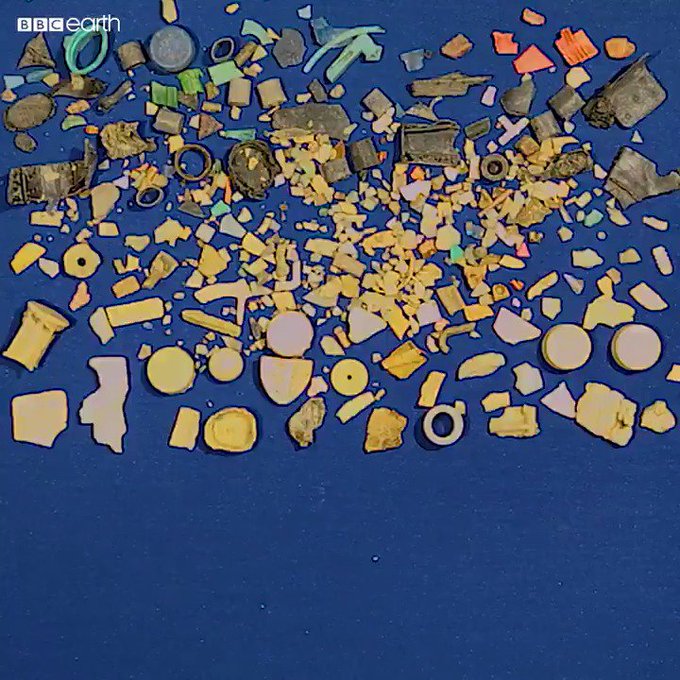
It’s small comfort to discover that albatrosses are not alone. At least 180 species of marine animals have been documented consuming plastic, from tiny plankton to gigantic whales. Plastic has been found inside the guts of a third of UK-caught fish, including species that we regularly consume as food. It has also been found in other mealtime favourites like musselsand lobsters. In short, animals of all shapes and sizes are eating plastic, and with 12.7 million tons of the stuff entering the oceans every year, there’s plenty to go around.

Even in the most remote areas of the open ocean, plastic flotsam can be found, with far-reaching consequences for marine life (Credit: BBC 2017)

The prevalence of plastic consumption is partly a consequence of this sheer quantity. In zooplankton, for example, it corresponds with the concentration of tiny plastic particles in the water because their feeding appendages are designed to handle particles of a certain size. “If the particle falls into this size range it must be food,” says Moira Galbraith, a plankton ecologist at the Institute of Ocean Sciences, Canada.

Like zooplankton, the tentacled, cylindrical creatures known as sea cucumbers don’t seem too fussy about what they eat as they crawl around the ocean beds, scooping sediment into their mouths to extract edible matter. However, one analysis suggested that these bottom-dwellers can consume up to 138 times as much plastic as would be expected, given its distribution in the sediment.

For sea cucumbers, plastic particles may simply be larger and easier to grab with their feeding tentacles than more conventional food items, but in other species there are indications that plastic consumption is more than just a passive process. Many animals appear to be choosing this diet. To understand why animals find plastic so appealing, we need to appreciate how they perceive the world.

“Animals have very different sensory, perceptive abilities to us. In some cases they’re better and in some cases they’re worse, but in all cases they’re different,” says Matthew Savoca at the NOAA Southwest Fisheries Science Center in Monterey, California.

One explanation is that animals simply mistake plastic for familiar food items – plastic pellets, for example, are thought to resemble tasty fish eggs. But as humans we are biased by our own senses. To appreciate animals’ love of plastic, scientists must try to view the world as they do.
Many animals appear to be choosing a plastic diet (Credit: BBC 2017)
Humans are visual creatures, but when foraging many marine animals, including albatrosses, rely primarily on their sense of smell. Savoca and his colleagues have conducted experiments suggesting that some species of seabirds and fish are attracted to plastic by its odour. Specifically, they implicated dimethyl sulfide (DMS), a compound known to attract foraging birds, as the chemical cue emanating from plastic. Essentially, algae grows on floating plastic, and when that algae is eaten by krill – a major marine food source – it releases DMS, attracting birds and fish that then munch on the plastic instead of the krill they came for.

Even for vision, we can’t jump to conclusions when considering the appeal of plastic. Like humans, marine turtles rely primarily on their vision to search for food. However, they are also thought to possess the capacity to see UV light, making their vision quite different from our own.

Qamar Schuyler at The University of Queensland, Australia, has got into turtles’ heads by modelling their visual capabilities and then measuring the visual characteristics of plastics as turtles see them. She has also examined the stomach contents of deceased turtles to get a sense of their preferred plastics. Her conclusion is that while young turtles are relatively indiscriminate, older turtles preferentially target soft, translucent plastic. Schuyler thinks her results confirm a long-held idea that turtles mistake plastic bags for delicious jellyfish.

Colour is also thought to factor into plastic consumption, although preference varies between species. Young turtles prefer white plastic, while Schuyler and her colleagues found that seabirds called shearwaters opt for red plastic.

Every year, around 8 million metric tons of plastic waste enters the ocean (Credit: BBC 2017)

Besides sight and smell, there are other senses animals use to find food. Many marine animals hunt by echolocation, notably toothed whales and dolphins. Echolocation is known to be incredibly sensitive, and yet dozens of sperm whales and other toothed whales have been found dead with stomachs full of plastic bags, car parts and other human detritus. Savoca says it’s likely their echolocation misidentifies these objects as food.

“There’s this misconception that these animals are dumb and just eat plastic because it is around them, but that is not true,” says Savoca. The tragedy is that all these animals are highly accomplished hunters and foragers, possessing senses honed by millennia of evolution to target what is often a very narrow range of prey items. “Plastics have really only been around for a tiny fraction of that time,” says Schuyler. In that time, they have somehow found themselves into the category marked ‘food’.


Because plastic has something for everyone. It doesn’t just look like food, it smells, feels and even sounds like food. Our rubbish comes in such a range of shapes, sizes and colours that it appeals to a similarly diverse array of animals, and this is the problem. Schuyler recalls someone asking, “why don't we make all the plastics blue?”, seeing as experiments suggest this colour is less popular among turtles. But other studies have shown that for other species the opposite is true.

So if there is no ‘one size fits all’ solution, no aspect of plastic that we can easily change to prevent animals from eating it, then what can we take from our foray into the minds of plastic-eaters? Savoca hopes that tragic stories like Attenborough’s albatross will help to turn the consumer tide against disposable plastics and encourage people to empathise with these animals. Ultimately this will help to cut off the supply of junk food pouring into the oceans.

Why The Taj Mahal Is At The Center of India’s Cultural Wars?

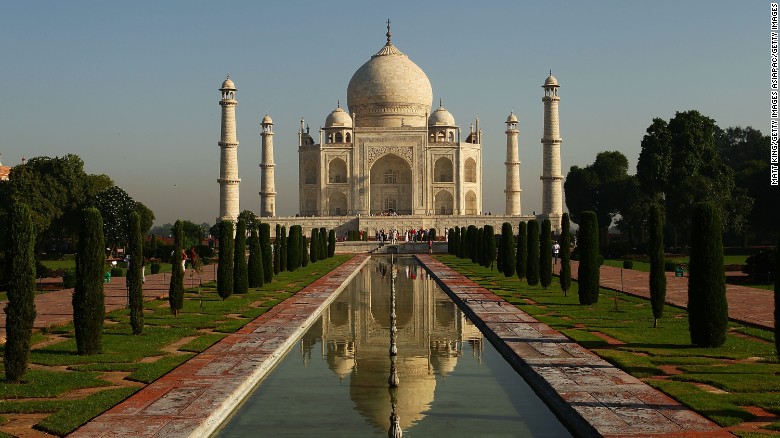
Construction of the Taj Mahal was completed in 1643.

The Taj Mahal is India’s most popular tourist attraction and its most recognizable architectural icon.
To outsiders, the building is an emblem of India, an impossibly romantic structure that stands alongside Peru’s Machu Picchu and China’s Great Wall as a true wonder of the world.

But within the country itself, a controversy is currently raging over the monument’s place within Indian culture, after it was excluded from an official government tourism brochure.

The recently published 32-page glossy booklet, the title of which translates as “Uttar Pradesh Tourism: Unlimited Possibilities,” highlights numerous landmarks throughout the northern Indian state. Yet the Taj Mahal, famously built in the 17th century by Muslim Mughal emperor Shah Jahan, is conspicuous by its absence.

Initial attempts by the state government, which is controlled by Prime Minister Narendra Modi’s Hindu nationalist Bharatiya Janata Party (BJP), to downplay the decision as a “non-issue” has done little to quell concerns.

Indian Tourism Minister Alphons Kannanthanam has also dismissed the controversy, stating that the Taj Mahal was “India’s pride.”

For many, the monument’s exclusion is evidence of a creeping Hindu nationalism intent on revising the South Asian nation’s cultural history.

“(The omission of the Taj Mahal) is pathetic and petty, but also depressingly characteristic of the party in power,” prominent Indian historian Ramchandra Guha told CNN.

“Their xenophobia and chauvinism have damaged the plural, accommodative traditions of the Indian Republic. Acts such as this deepen the damage while further shaming India in the eyes of the world.”

Muslims pray during the Eid al-Adha festival at the mosque inside the Taj Mahal in Agra on September 13, 2016.

What is Indian culture?

For the BJP's critics, the fact that the Taj is located in Uttar Pradesh (UP) state is instructive.
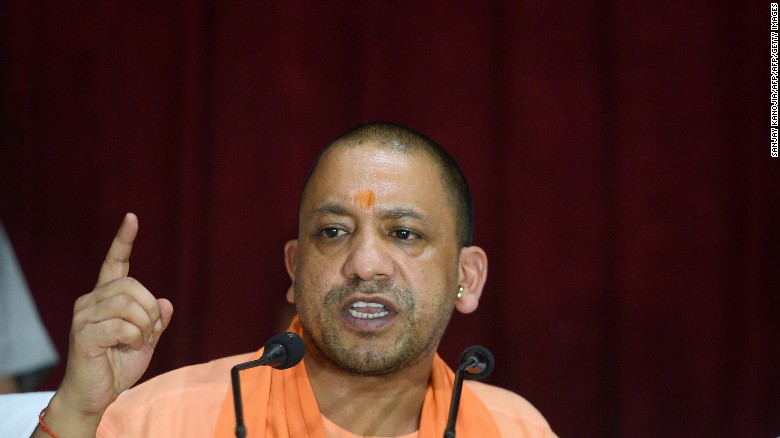
In March this year, the BJP named hardline Hindu priest Yogi Adityanath as UP's chief minister, after the party won state polls held earlier in 2017.

Since assuming power, Adityanath has repeatedly derided the importance of the famous monument, noting in June that "(the Taj Mahal) did not represent Indian culture," while in July, the monument was excluded from the state's heritage plan budget, with funding instead being allocated to various Hindu pilgrimage sites.

At an event in Bihar in June this year, he announced to applause that foreign dignitaries are now being gifted copies of the Bhagwad Gita -- one of Hinduism's most revered texts -- rather than models of the Taj and other minarets.

Uttar Pradesh Chief Minister Yogi Adityanath gestures during a press conference, August 13, 2017.

And nor is he alone. Speaking at political rally in Meerut, Uttar Pradesh on Monday, Sangeet Som, a state-level Bharatiya Janata Party lawmaker and ally of Adityanath, reinforced the point.

"Many people were disappointed that the Taj Mahal was removed from the Uttar Pradesh tourism booklet. What history are we talking about?" asked Som.

"The creator of Taj Mahal (Mughal emperor Shah Jahan) imprisoned his father. He wanted to wipe out Hindus. If these people are part of our history, then it is very sad and we will change this history."
The Uttar Pradesh government and Chief Minister Adityanath's offices did not respond to requests for comment.

Critics of the Hindu nationalists have called out their attempts to downplay the Taj's significance, noting that revisionist views are not shared by a majority of Indians.

"The aggression and vociferous clamor of Hindutva nationalists, however, should not obscure the fact that most Indians across the country think of the Taj Mahal with pride -- it's never been foreign to our culture, it's always been one of many iconic parts of our common, shared history over centuries," prominent Indian writer and columnist Nilanjana S. Roy told CNN.

"The broader rise in Hindu nationalism has meant that this junk version of history has been more widespread, but it's not so easy for any country to deny centuries of its own history and culture. This rise has also been accompanied by a growing discomfort with these views -- many can see for themselves that our history is complex, layered and not so simplistic."

Fault lines

The Taj was built in the 17th century by Muslim Mughal emperor Shah Jahan to honor the wish of his third and favorite wife Mumtaz Mahal, who died in 1631 while giving birth to their 14th child.
It was completed in 1648 and declared a UNESCO World Heritage site in 1983.

It now draws about seven million visitors annually and is India's top tourist site in terms of both revenue and footfall.

Pluralist opponents of the Hindu nationalist movement say attempts to obscure these facts are part of a longstanding attempt to deny or twist India's rich medieval history.

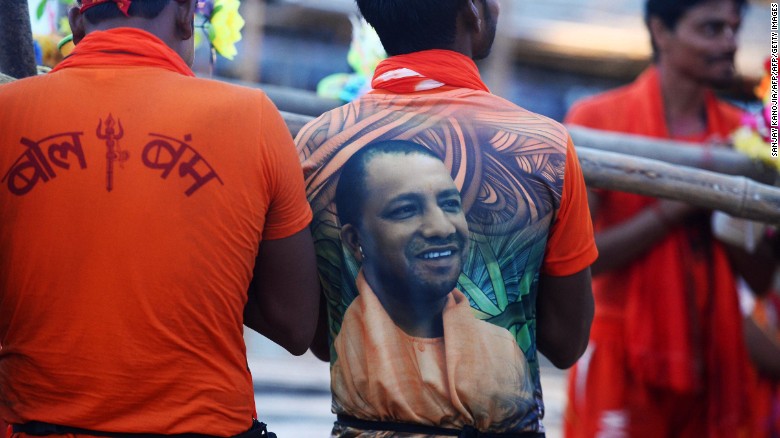
A Hindu devotee, wearing a t-shirt with a photo of Uttar Pradesh Chief Minister Yogi Adityanath, stands on the bank of Ganges, July 14, 2017.

"To think of that period in narrow terms as 'Islamic' -- and therefore to be rejected -- is divisive and ahistorical. Previous attempts to claim the Taj Mahal as a Hindu temple have been made for over a decade, and this present rejection of one of India's most beautiful and beloved monuments is basically a crude move in an ongoing campaign of religious identity politics," Roy added, referring to an ongoing court case in which a number of Hindu nationalists have alleged that the Taj is actually a Hindu temple called Tej-o-Mahalaya dedicated to the Hindu deity Shiva.

The BJP's backers, however, reject any charge of the party trying to rewrite history or take the spotlight away from the Taj, saying the party's detractors are simply trying to stir controversy where there is none.

Swapan Dasgupta, a BJP member of the upper house of the Indian Parliament, also told CNN that the controversy over the Taj's exclusion from the UP tourism booklet has been blown out of proportion.
"It is an example of someone trying to peddle their idea of political correctness. It has nothing to do with either Hindutva or anything else. The Taj is a magnificent monument and we should celebrate its beauty," he said.